Industry
Wind Energy
Client
Green Power Monitor
Turning a Declining Market Leader into a Competitive Design Tool
Reclaiming Market Leadership by Reducing Time-to-Value
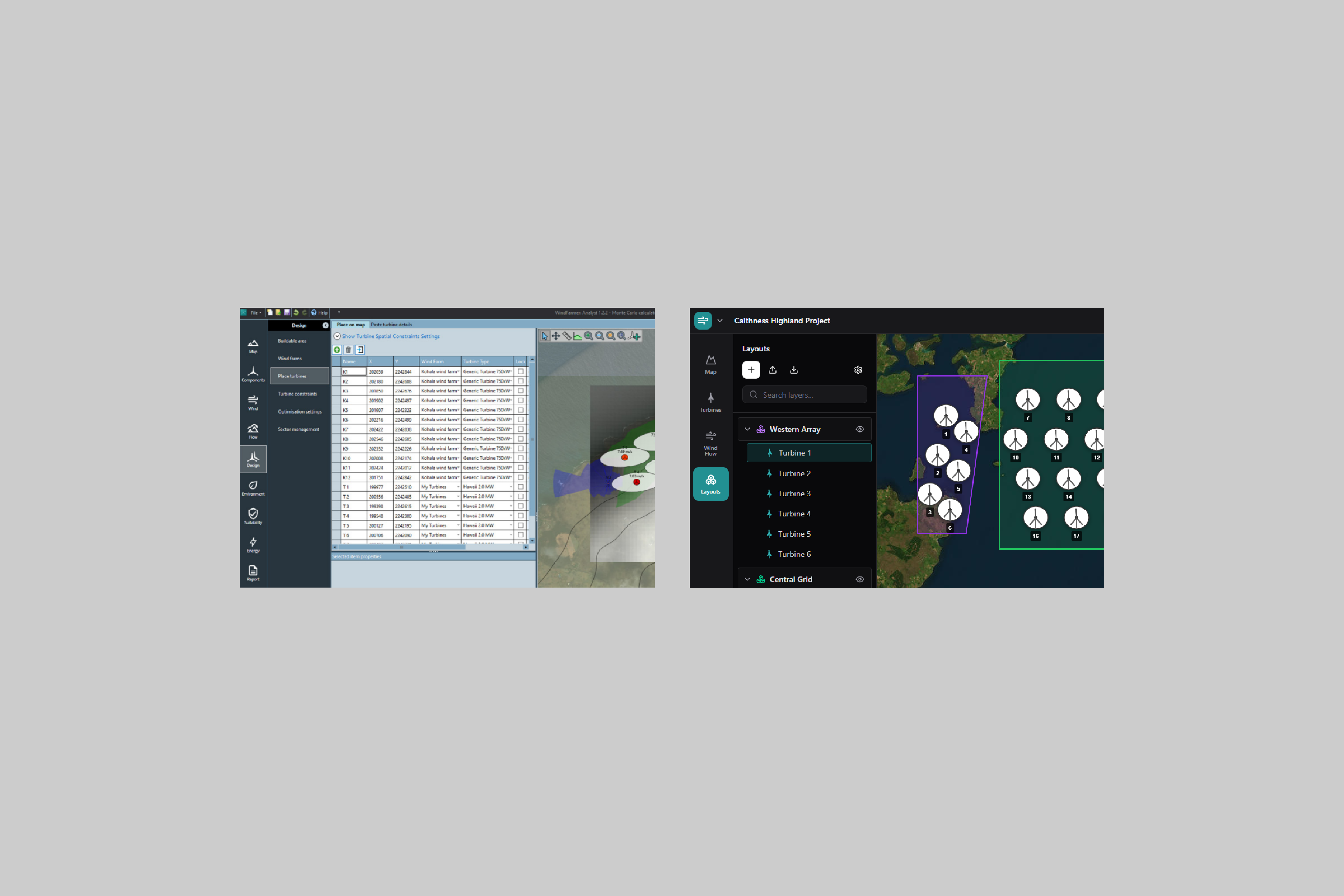
WindFarmer had been the market-leading wind farm design tool for nearly two decades, at one point holding over 80% market share. However, a lack of product evolution allowed newer competitors to overtake it, leaving WindFarmer with around 5% market share and an increasingly outdated user experience. Through discovery, it became clear that new and trial users typically needed 6–12 months to feel confident using the tool, resulting in a 12-month sales cycle and heavy reliance on paid, week-long training courses. This model no longer matched the expectations of younger engineers (21–30), who were unwilling to attend long training sessions and frequently required trial extensions beyond the standard one month. The redesign focused on radically minimising time-to-value: enabling a new user to confidently use the tool within a single day using self-serve documentation and short demo videos. This allowed the trial period to be reduced first to 14 days, and later to 7 days, significantly shortening the sales cycle.

Simplifying the Interface to Support Iterative Design Workflows
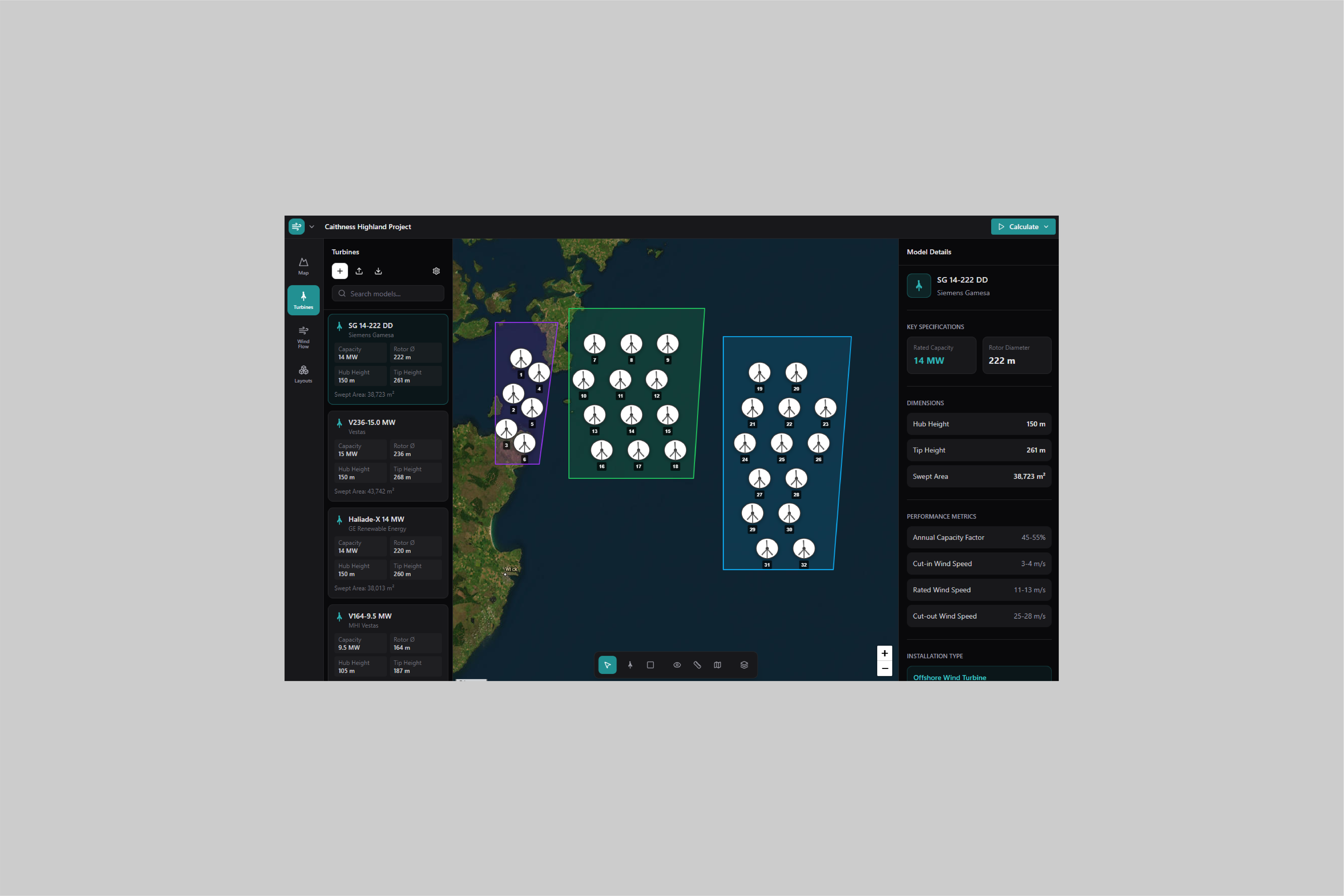
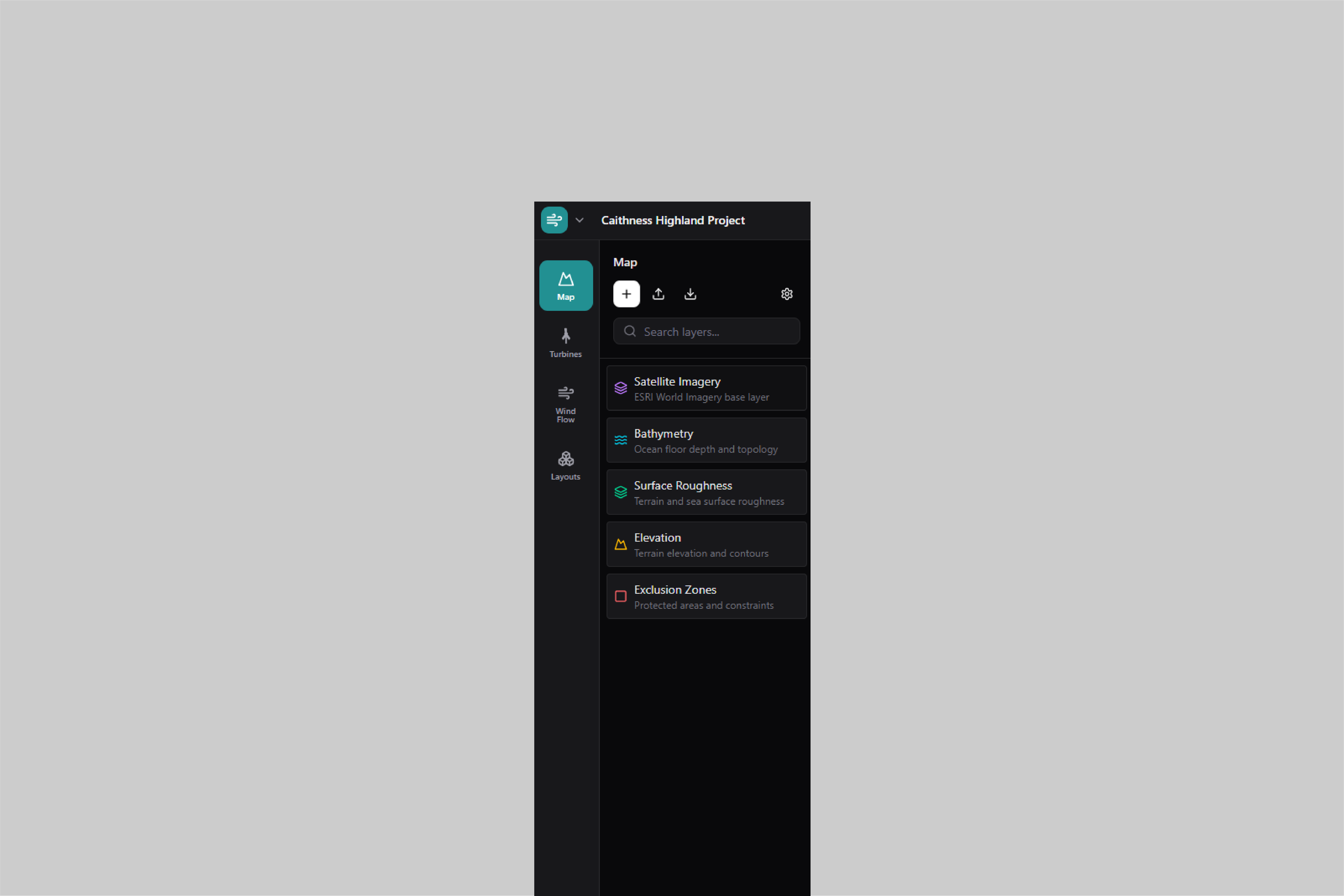
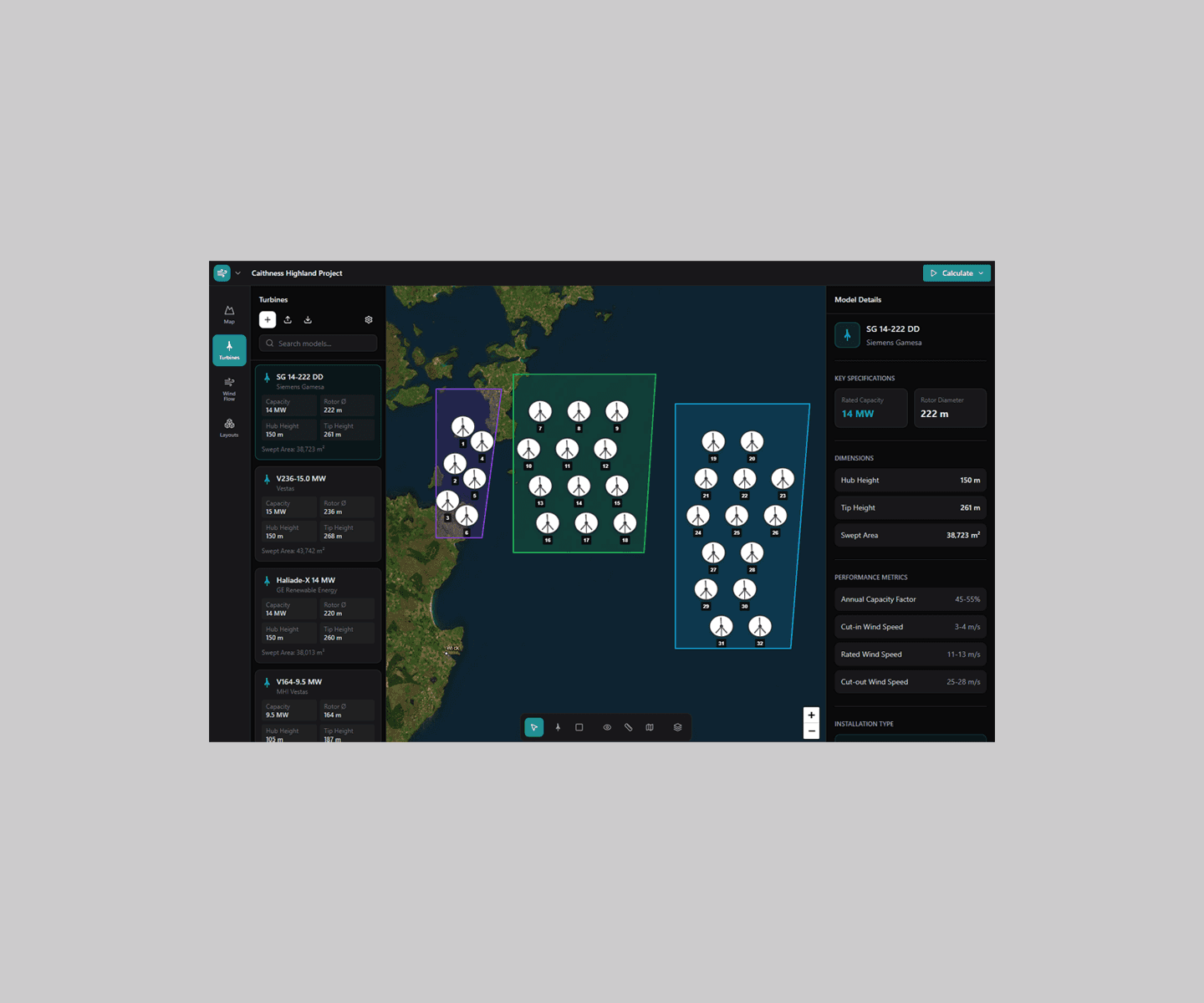
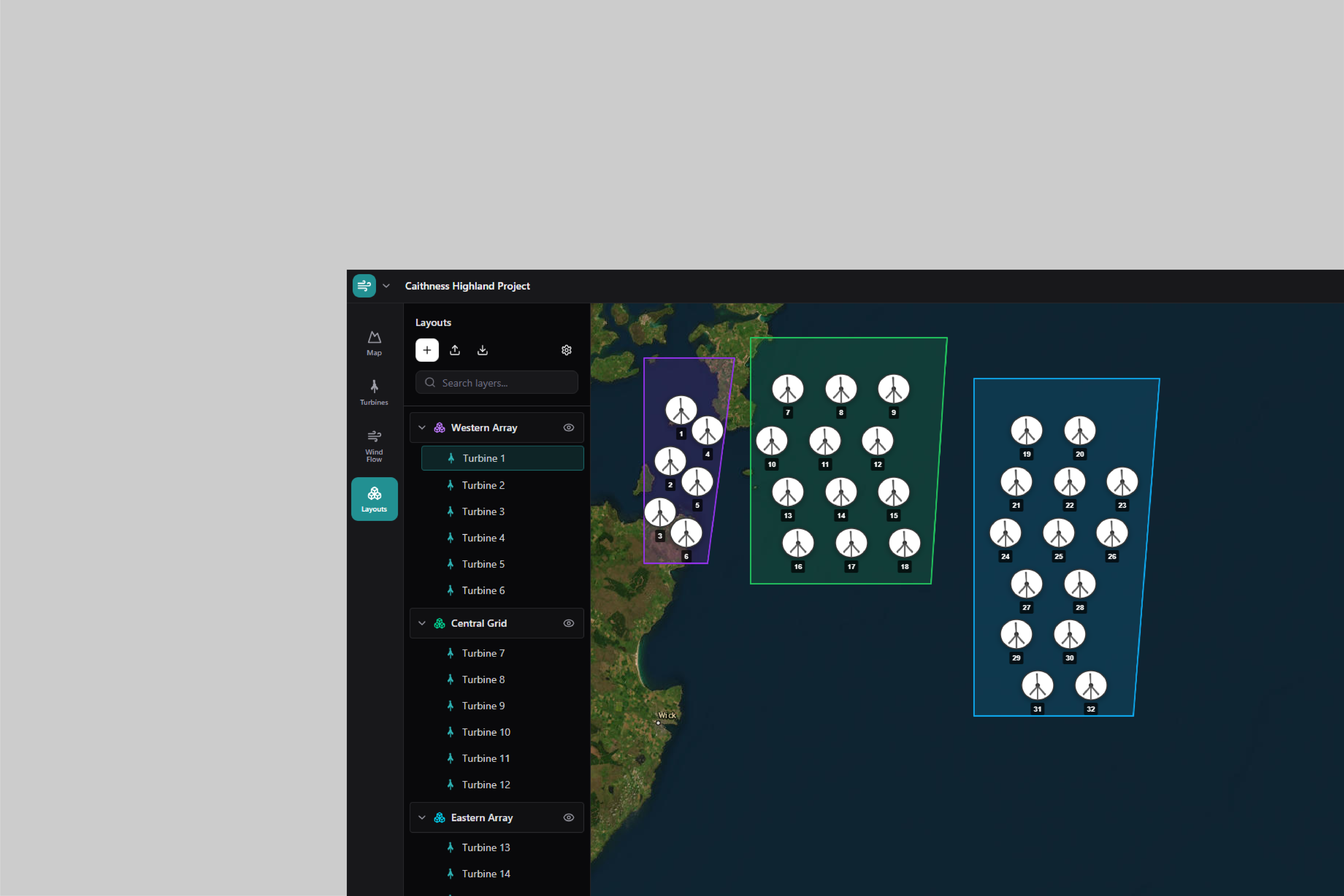
The existing product was structured around “chapters” and “tasks”, intended to guide engineers step-by-step through the workflow. In practice, this created three to four layers of hierarchy and conflicted with the inherently iterative nature of design work. Simple activities - such as comparing multiple layout options - required creating entirely separate projects, while each task screen used a different layout, forcing users to learn dozens of inconsistent interfaces. A further critical issue was traceability: calculation results overwrote previous outputs, making it difficult for users to understand which inputs produced which results. This led to costly errors and rework when mistakes were discovered late in projects. The redesigned application flattened the information architecture to a single level focused entirely on inputs. Users could store multiple versions of layouts and assumptions within a single workbook, making scenario comparison fast and intuitive. Outputs were decoupled from navigation and generated as immutable “snapshots” of the workbook state, ensuring full traceability between inputs and results and dramatically reducing error risk.